

2026-10-13
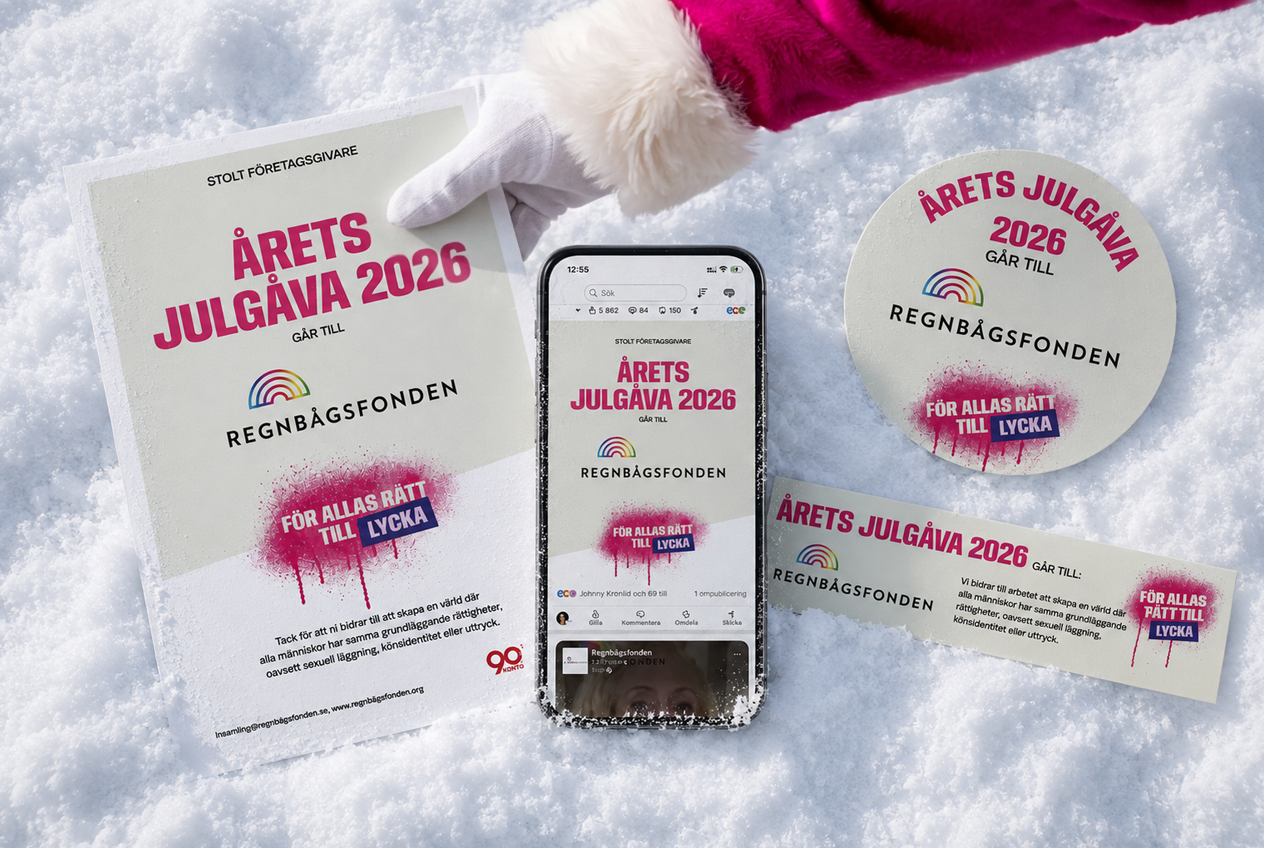
A Christmas Gift for Everyone’s Right to Happiness
This year, your company can choose a Christmas gift that stands for something bigger:
Love.
Freedom.
Inclusion.
Because everyone should be able to go to work and feel: Here, I can be myself!
Without fear. Without shame. Free to be happy.
By choosing Regnbågsfonden’s Christmas gift, you help us fight for a world where everyone has the same opportunity to live freely, safely and happily.
Happiness should be for everyone.
Support us
Become a monthly donor or give a gift
The Rainbow Foundation fights for everyone's right to be themselves, love and be loved. In Sweden and all over the world! When you give a gift to the Rainbow Foundation, you join and contribute to the work for the rights of LGBTQI people.

Status

Regnbågspriset 2026
On going
locationTexas, United States
launchYear2026
The Rainbow Prize, worth SEK 100,000, goes to the Transgender Education Network of Texas (TENT) and its CEO Emmett Schelling, whose leadership and activism have been crucial to the organization's work and to the defense of transgender rights in Texas and the United States.
The Transgender Education Network of Texas (TENT) is a trans-led organization that works to strengthen transgender rights in the state and provide transgender people with access to care and support. In a United States where attacks on transgender rights have increased sharply in recent years, TENT has become an important voice in the resistance to increasingly harsh anti-trans policies. Under Emmett Schelling's leadership, TENT has become one of the most influential trans organizations in the United States.
Some examples of TENT’s work:
· TENT and Emmett Schelling played a central role in stopping the so-called “bathroom bill” in Texas in 2017, which would have forced transgender people to use public restrooms that match the gender they were assigned at birth.
· In 2025, TENT introduced over 100 bills to strengthen the rights and improve the lives of LGBTQ people in Texas. The bills were a response to the over 200 anti-trans and anti-gay bills that were introduced in the state assembly that same year and show that there are alternatives to the hostile and hateful narrative that is increasingly directed at LGBTQ people in the state.
· In the same year, the organization launched a so-called “bill tracker” – a website that lists hostile bills against LGBTQ people in Texas and makes it easier for people to follow and thereby influence the legislative process.
· Through the Know Your Rights: Voting While Trans program, TENT has created a tool to help trans people exercise their democratic right to vote and resist anti-trans intimidation at the polling stations.
· Through safe meeting places, workshops and conversation support, TENT strengthens the entire trans community
Due to US immigration policy, Emmett Schelling cannot risk coming to the Regnbågsgalan in Stockholm on April 20th in person, as he risks being denied re-entry. Instead, Lais Milburn (she/her), AndreaSegovia (she/her) and Diaz Reyes Camacho (he) from TENT will come to the Regnbågsgalan to receive the award in his place.
Tanzania Trans Initiative
On going
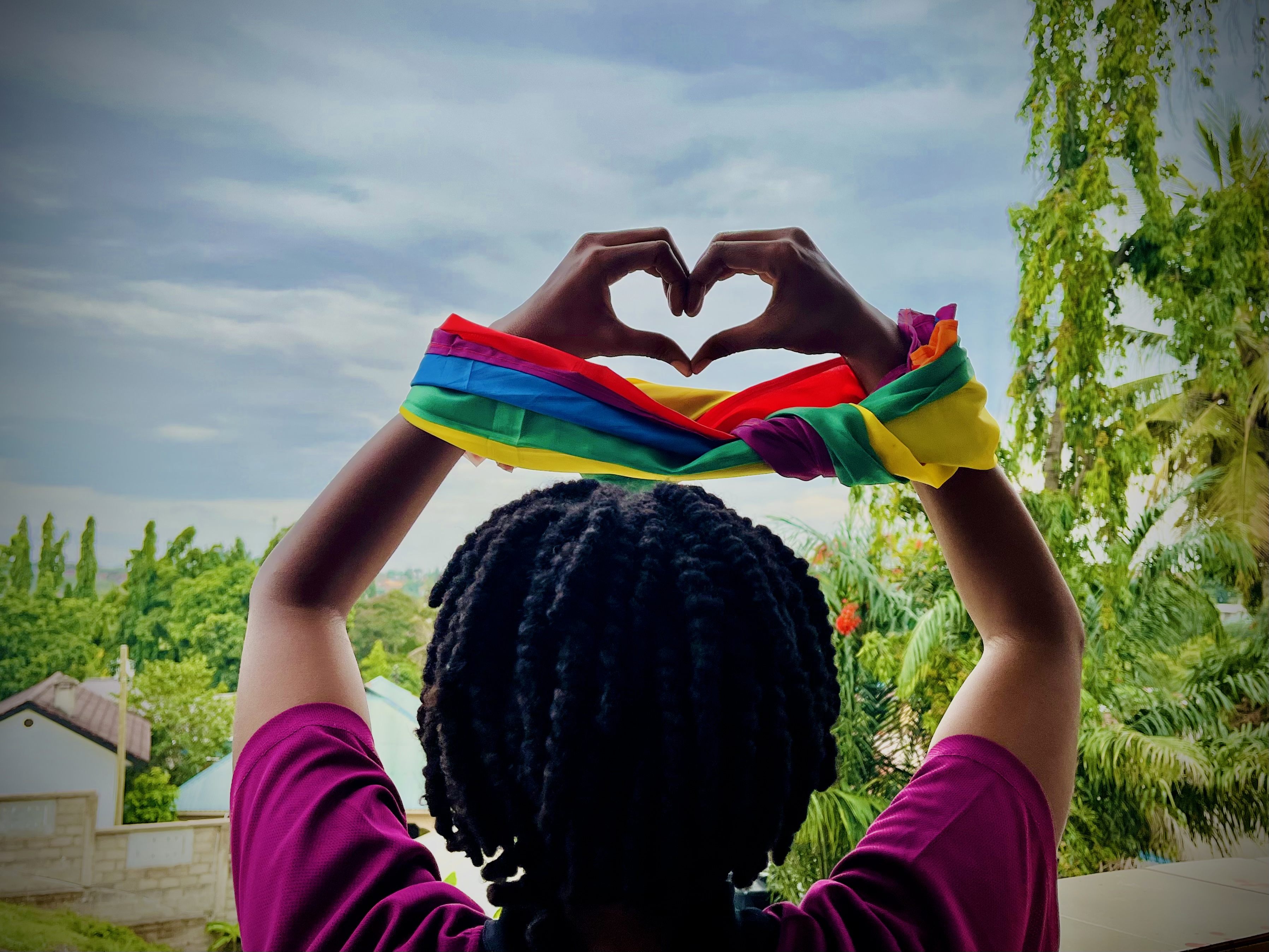
Trans people in Tanzania live under strong stigma, discrimination and violence. Many are forced to hide their identity for fear of harassment and persecution. Access to basic healthcare is characterized by prejudice, which means that many avoid healthcare.
In this reality, the Tanzania Trans Initiative (TTI) is one of the few actors that offers safety and support. TTI is a trans-led feminist organization that works to empower trans and non-binary people. With a small team and an active board, the organization offers safe meeting places, psychosocial support, vocational training and mentoring, and advocates for improved health and financial security for the community.
With support from the Rainbow Fund, TTI focuses on mental health, sports and economic empowerment for young trans and non-binary people in Tanzania. Activities include support groups, vocational training and agricultural projects.

SUPPORT TO LGBTQ_REFUGEES IN COSTA RICA
On going
Across Central America, LGBTQ+ people continue to face extreme violence, discrimination, and impunity. In Honduras, El Salvador, and Guatemala, hate crimes and murders remain alarmingly high—often without justice. Political repression and daily discrimination force many to flee in search of safety and dignity. For many, Costa Rica has become a rare refuge: a country with relative stability, stronger institutions, and access to education and healthcare. Yet LGBTQ+ migrants and refugees still face exclusion, xenophobia, and barriers to work and protection.
IRCA Casabierta is Costa Rica’s only organization dedicated to protecting and empowering LGBTQ+ migrants and refugees. Founded in 2013, it combines human rights advocacy with psychosocial, legal, and employment support. The organization runs the country’s only LGBTQ+ Employment Office (in partnership with the Ministry of Labor), provides legal and mental health assistance to hundreds of displaced people, and promotes inclusion through advocacy and partnerships.
The current project strengthens IRCA Casabierta’s capacity by expanding employment training, legal aid, and mental health services; maintaining safe facilities and key staff; and advancing advocacy for displaced LGBTQ+ people. The funding helps secure the continuity of core programs and long-term resilience at a time when international support for LGBTQ+ and migration work in Latin America is rapidly shrinking. From Costa Rica, IRCA Casabierta not only provides lifesaving assistance but also builds inclusive, community-led models that inspire change across the region.
Personal stories

"Time and time again, we've thought we've hit rock bottom, but then something new happens and we realize it could get even worse."
Why was the Moscow Community Center started?
When we opened the Moscow Community Center, we believed that we would work together with the community, provide psychological and legal support, organize events and carry out advocacy work. Since 2017, we have done all that, but also saved many lives, as big as that sounds.
What does the situation look like for LGBTQI people in Russia right now?
The situation in Russia is getting worse and worse at rapid speed since 2012. Time and again we have thought that we have reached the bottom, but then something new happens and we realize that it can get even worse. When Russia attacked Ukraine, everyone was in shock and many rushed to leave Russia. The community became fearful because they understood that the persecution of LGBTQI people would worsen and that militarization would lead to more violence and greater impunity for crimes against LGBTQI people. Many from the community began looking for opportunities to flee the country or hide in larger cities where homophobia is not as widespread as in smaller towns.
Today, there is only one safe house for LGBTQI people in Russia, the Moscow Community Center, which opened in 2017 with support from the Rainbow Foundation. The center is an indication of what the situation looks like for LGBTQI people in Russia. In the many messages we receive from the community, it is clear how the situation looks like in Russia in general and for the LGBTQI community in particular. Since Russia's invasion, we have been overwhelmed with requests from people who need somewhere to stay in Moscow while they apply for visas or escape by other means.
The persecution of activists who have spoken out negatively about the war and government policies has also intensified. Therefore, we have started an open program that accepts activists who are persecuted by the political regime, regardless of their sexual orientation or gender identity. Police make home visits warning activists that they will face problems if they participate in demonstrations and many have been forced to leave their homes and find safer alternatives.
After Russia started taking Ukrainian cities, many people fled the occupied territories, and Moscow is the main hub before traveling to other countries. Ukrainians fleeing have often left everything they own, have no money to pay rent and are afraid to check into hotels. The Moscow Community Center has also received them.
Recently, the situation has worsened and migration has increased. Men who risked being drafted into the war quickly fled. In countries like Kazakhstan and Armenia, you can enter without an international passport, and many Russians have made their way to the cities near the border. LGBTQI people are particularly affected because they have to choose between the risk of being drafted into the war or fleeing to neighboring countries that are even more homophobic than Russia.
Transgender people who have not had time to change their legal documents have started coming to Moscow to get the certificates needed to change their papers. They are also supported by the Moscow Community Center.
What has the support from the Rainbow Foundation meant for your work?
The Rainbow Foundation is not only a partner of ours, it is the first organization that supported the Moscow Community Center and an organization that provided crucial help in a very difficult time for the LGBTQI community. When the regime in Chechnya murdered homosexuals, the Rainbow Foundation quickly collected money and we were able to open the center and were able to smuggle out many who were in danger. That the center still exists today is thanks to the support from the Rainbow Foundation.



FAQ
Here you will find answers to the most common questions
What does LGBTQI mean?

LGBTQI is an umbrella term for lesbian, gay, bisexual, transgender, queer expressions and identities, and intersex people.
How was the Rainbow Foundation founded?
The Rainbow Foundation was founded in 2013 by Arto Winter, Jonas Gardell and Jon Voss in connection with a collection to oppose the death penalty law in Uganda.
How is the Rainbow Foundation financed?
The Rainbow Foundation's work is made possible thanks to gifts and contributions from private individuals, companies and foundations.
Here you will find answers to the most common questions
FAQ


The Rainbow Foundations's purpose is to provide financial support to LGBTQI organizations throughout the world, primarily in countries where rainbow people are persecuted and harassed by authorities, police and religious institutions.